
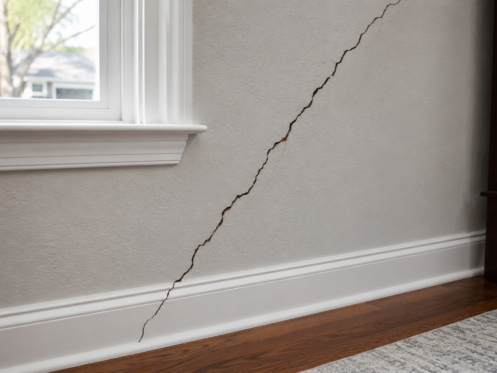
A crack above the doorframe. A floor that dips near the kitchen. A musty smell that comes back after heavy rain. If you’ve booked a foundation inspection, start by writing down what changed and when you first noticed it. Take a few dated photos, gather any repair records you have, and clear a path to the areas you want the inspector to see.
Before the Inspection
Walk Through Your Home and Note What Changed
Start where you first noticed a problem. Write down the room or side of the house, what you saw, and whether it has changed. If a door sticks and the floor slopes in the same hallway, note both so you can point them out together.
- Inside the house — Look for cracks near door or window corners, doors that have become harder to latch, gaps along baseboards, and floors that feel sloped, soft, or bouncy.
- Outside the house — Note cracks in visible brick or block, gaps where steps or a porch meet the house, changes around the chimney, and places where water pools or downspouts discharge near the foundation.
- In the basement or near the crawl space entrance — Note water stains, musty odors, standing water, or walls that appear to bow. Stick to areas you can reach safely and leave the crawl space itself for the inspector.
If you’re unsure what to point out, see RhinoLift’s guide to common signs of foundation damage.
Take Dated Photos and Gather Records
Take one wide photo to show where the issue is and one close-up to show the detail. If you can reach the crack safely, hold a ruler beside it for scale. Keep any older photos that show the same spot, even if the crack was in the background.
A note can be as simple as this.
Back bedroom, above the window. First noticed in September. The crack looks longer in this week’s photo, and the window has been harder to open since the last heavy rain.
Gather any previous inspection reports, engineer reports, repair invoices, warranties, or photos taken before a repair. Mention past patching, drainage work, or changes to gutters, downspouts, or landscaping. If the problem comes and goes, note whether you see it after heavy rain, during dry stretches, or at certain times of year.
Clear a Path to the Areas You Want Checked
Move light furniture or boxes away from affected walls. Clear the path to the basement door or crawl space hatch, make sure exterior gates can be opened, and plan where pets will stay during the visit. If an area is locked, blocked, or difficult to reach, tell the team ahead of time. Leave heavy items in place and point out what’s behind them.
During the Inspection
Show the inspector where you first noticed the issue, then share your photos and timeline. Depending on your home and what’s accessible, the visit may include looking at visible cracks and uneven floors, checking conditions in the basement or crawl space, and seeing where water drains outside. For more on what an inspector may look at, read our guide to foundation inspections in North Carolina.
Keep these questions handy:
- What did you find, and what points to the likely cause?
- Does this appear to involve foundation movement, moisture, or both?
- Was there anything you couldn’t see or evaluate today?
- What should I address first? If I can monitor something, what change should prompt a follow-up?
- If you recommend repairs, what would the work include, and what warranty terms apply to that work?
After the Inspection
Write down what the inspector found, which areas you discussed, and what they recommend doing next. If you receive a proposal, ask the inspector to show you where the work would happen and explain what each part addresses.
Depending on the findings, you can learn more about RhinoLift’s foundation repair, crawl space repair, and basement waterproofing services.
Frequently Asked Questions
Should I patch cracks before a foundation inspection?
Leave visible cracks and stains as they are when practical. If you’ve already patched or painted over a spot, tell the inspector where it was and share any photos you took beforehand.
Do I need to go into my crawl space before the inspection?
You can stay outside the crawl space. Clear the path to the hatch and tell the inspector where it is. Share anything you’ve noticed from an accessible area, such as a musty smell or water near the entrance.
Do I need to be home during the inspection?
Ask about access arrangements when you schedule. If you’re home, you can show the inspector where problems started, share your photos, and ask questions as you review the findings.
How long should I set aside for a foundation inspection?
Ask for an appointment window when you schedule. The time needed can vary with the size and layout of your home, which areas are accessible, and what the inspector needs to evaluate.
Can clay soil affect my foundation?
Expansive clay soils can swell when wet and shrink as they dry. That movement can affect a foundation. If you notice cracks, sticking doors, or uneven floors at certain times of year, share that timeline with your inspector.
Is a foundation inspection the same as a home inspection?
A general home inspection reviews multiple systems in the house. A foundation inspection focuses on the foundation and related concerns, such as uneven floors, visible cracks, and moisture or drainage conditions near the home.
Schedule Your Free Foundation Inspection
If you’ve noticed cracks, sloping floors, or recurring moisture, RhinoLift Foundation Solutions offers free inspections in the Charlotte, NC, and Charleston, SC, areas. Tell us what you’re seeing when you reach out. You can also check our service areas in North and South Carolina.
Schedule your free foundation inspection
