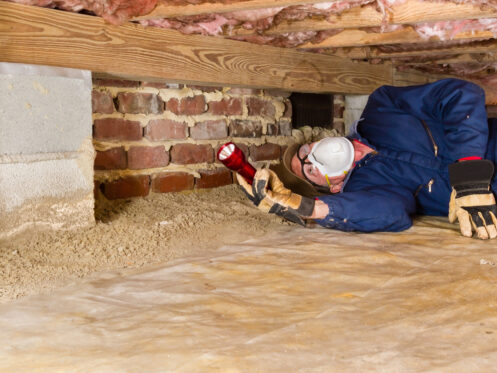
If your floors feel soft underfoot, bounce when you walk across them, or visibly dip in certain areas, something is wrong underneath your home. Most people assume it’s a flooring problem: maybe the hardwood is warping or the subfloor needs replacing. But in almost every case we see, sagging floors trace directly back to the crawl space. Something down there has weakened, and your floors are showing the symptoms. Here’s what causes it, what’s actually happening below your home, and how to fix it before the damage spreads.
What Causes Floors To Sag?
Sagging floors are a structural issue, not a cosmetic one. The flooring itself is usually fine. It’s the support system underneath that’s failing.
The most common causes we see in North Carolina and South Carolina homes:
- Moisture damage to floor joists and beams: Prolonged humidity or water exposure softens the wood over time, causing it to lose strength.
- Wood rot: Once moisture takes hold, rot spreads along joists and can compromise large sections of the crawl space structure.
- Undersized or overspanned beams: Older homes were sometimes built with supports that don’t meet today’s standards. Over decades, they flex and sag.
- Termite and pest damage: Insects eat through load-bearing wood from the inside out, and you often can’t see the damage until the floor starts to give.
- Settling or shifting piers: If the columns or piers supporting your beams shift or sink, everything above them drops.
In our climate, moisture is the number one cause. Charlotte’s humidity and clay soil, combined with Charleston’s high water table, create conditions where crawl space wood is under constant assault.
How To Tell If Your Crawl Space Is the Problem
Not every uneven floor means your crawl space is failing, but most of the time it does. Here are the signs that point to a crawl space issue rather than a surface-level flooring problem:
- Floors slope toward the center of the house rather than the edges
- You feel a noticeable bounce or soft spot in specific areas
- Interior doors start sticking, swinging open, or not latching
- Gaps appear between the floor and baseboards or trim
- A musty smell rises through the floor or comes through your vents
If any of these sound familiar, the crawl space needs to be looked at. These symptoms don’t improve on their own and they typically get worse with each passing season.
What’s Actually Happening in the Crawl Space
Here’s the progression we see over and over in homes across the Carolinas:
It starts with humidity. An unsealed or poorly ventilated crawl space traps warm, moist air beneath your home. In Charlotte, clay soil holds onto rainwater and releases moisture slowly. In Charleston, the water table keeps the ground saturated almost year-round. Either way, that moisture has nowhere to go.
Over months and years, that humidity saturates the wooden joists and beams in your crawl space. The wood absorbs moisture, softens, and begins to lose its ability to carry weight. Rot sets in. Mold follows. And gradually, the joists that are supposed to hold your floors level begin to sag under the load of your home.
The longer this goes on, the more widespread the damage becomes. What starts as one soft spot can eventually affect entire rooms.
How We Fix Sagging Floors From the Crawl Space
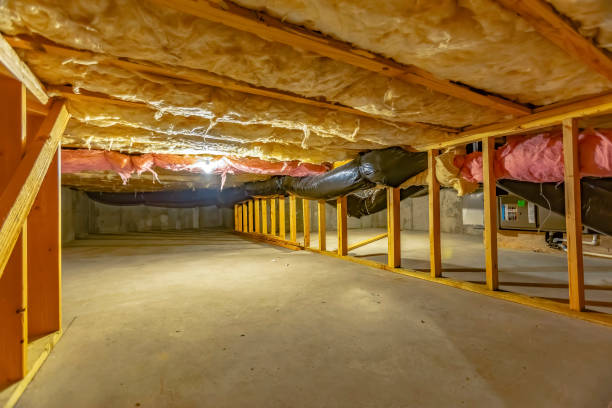
Fixing sagging floors isn’t about patching the surface. It’s about restoring the structural support underneath and making sure the problem doesn’t come back.
- Inspect and diagnose: We get into the crawl space and identify exactly what’s causing the sag. Is it moisture? Rot? Pest damage? Undersized beams? Shifted piers? The fix depends entirely on the cause.
- Address the moisture source: If humidity or water is driving the damage, we solve that first. This might mean encapsulation, drainage improvements, or dehumidifier installation. There’s no point reinforcing wood if it’s going to keep getting wet.
- Repair or reinforce the structure: Depending on what we find, this can include installing supplemental beams, sistering damaged joists, adding adjustable steel support posts, or replacing failed piers. The goal is to restore proper load distribution and bring the floor back to level.
- Prevent recurrence: Once the structure is solid, we seal the crawl space so moisture can’t rebuild and start the cycle again.
Most sagging floor repairs are completed in one to three days depending on scope. And homeowners often notice the difference immediately once support is restored.
What Happens If You Wait?
Sagging floors don’t level back out on their own. The wood rot, moisture damage, and structural weakness underneath will continue to spread. What starts as a soft spot in one room can eventually affect hallways, bathrooms, and adjacent living areas.
Repair costs go up the longer the problem sits. A few supplemental supports installed early is a fraction of the cost of replacing entire joist systems down the road. In severe cases, floors can fail entirely, creating safety hazards and requiring major reconstruction.
Early intervention is always simpler and cheaper. If something feels off underfoot, don’t wait to find out what’s underneath.
Frequently Asked Questions
Can sagging floors be fixed without replacing them?
In most cases, yes. We repair the support structure in the crawl space, which lifts and levels the floor from below. The flooring itself usually doesn’t need to be removed or replaced.
How much does sagging floor repair cost?
It depends on the extent of the damage and what’s causing it. A few new support posts cost less than replacing rotted joists across a full crawl space. After a free inspection, we provide clear pricing so you know exactly what to expect.
Is this covered by homeowner’s insurance?
Typically no. Most policies don’t cover damage from gradual moisture, rot, or settling. However, if the damage resulted from a sudden event like a burst pipe, there may be coverage. Check with your provider.
How do I know if it’s a crawl space issue vs a foundation issue?
If floors sag toward the center of the home, it’s usually crawl space supports. If floors slope toward an exterior wall or you see wall cracks and sticking doors throughout the house, foundation settlement may be the cause. An inspection can confirm which one you’re dealing with.
Don’t Ignore What’s Happening Beneath Your Floors
If your floors are sagging, bouncing, or sloping, the answer is almost always in the crawl space. The good news is it’s fixable, especially when you catch it early. If you’re in the Charlotte or Charleston area, schedule a free crawl space inspection with RhinoLift. We’ll get underneath, show you what’s going on, and give you a clear plan to fix it.
Reviewed by Josh Kyle Davis, CEO at RhinoLift Foundation Solutions. Licensed General Contractor in NC and SC with 10 years of foundation, crawl space, and structural repair experience.
